Driverless Public Transit Vehicles –
Thus far, in our “work automation” series, we’ve posted about factory and logistics mechanization, self guided travel, and robotics in health care. This post is completely transportation- specifically, what’s new about your commute now? How will automation effect how we travel in the next 10 to 20 years?
Governments and carmakers – in the United States and around the world – are moving to provide commuters with a self driving future. That much is certain. This post is focused on automation that gets you there without a private car.
Future Bus
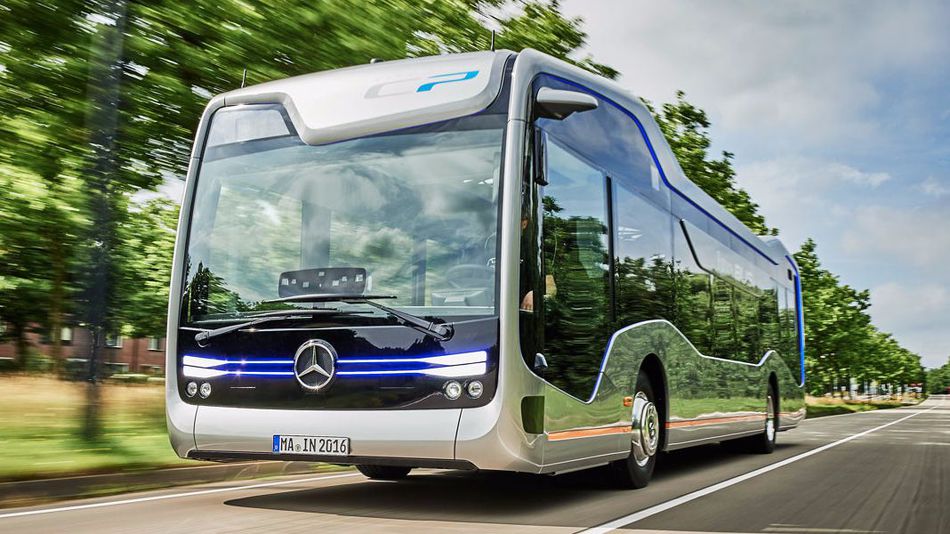
First up, the Mercedes-Benz Automated Bus. The technology is based on the company’s self driving long haul truck program. Earlier this year, it autonomously drove its first route through Amsterdam, making its way from the Schiphol airport to Haarlem, a town nearby. Mercedes claims that this is the first time such a vehicle has been used in a conventional traffic environment.
Here is an amazing video which shows the Mercedes/Daimler Future Bus in action:
October 25th Update:
Singapore has announced that it is expanding its test of autonomous public transit. It first limited robotic vehicle trials to taxis- however, these new tests will involve two large buses (hybrids) which will take passengers from a university to a business park- with a potential expansion to a light rail station. A more detailed overview (and mapped routes) of Singapore’s autonomous bus test are available at Techcrunch and Channel News Asia.
“Current efforts worldwide have been focused on cars,” said Professor Lam Khin Yong, NTU Chief of Staff and Vice-President of Research. “So, this autonomous bus trial is the first of its kind in Singapore that will aim to improve road safety, reduce vehicle congestion, alleviate pollution and address manpower challenges.”
Robot Electric Mini Buses Olli and EZ10
Next up, a much smaller robotic vehicle from Local Motors, the company that created the first 3d printed car.
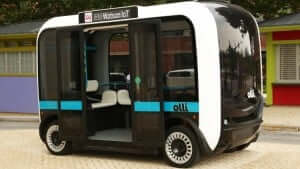
There are quite a few advantages in “printing” a car, rather than manufacturing, one- but we’ll save that a later post. For now, what’s interesting is how Local Motors is leveraging its efficient, on demand style of vehicle making. In a partnership with IBM’s Watson big data resource, Local Motors has created a mid size community travel pod- It’s an electric, autonomous, on demand vehicle which is created using some printing technology learned from Local’s experience with the “printed” car. The travel pod, (and system), are together called “Olli”, and the solution is one of several autonomous passenger van programs now being deployed worldwide.
For IBM, this project is a demonstration of Watson’s ability to interact with community and assist with everyday issues in the real world, part of an overall movement toward IOT- “An Internet of Things”
“IBM technology, including IBM Watson or IBM Watson IoT technology, does not control, navigate or drive Olli. Rather, the IBM Watson capabilities of Olli will help to improve the passenger experience and allow natural interaction with the vehicle,” the company said.
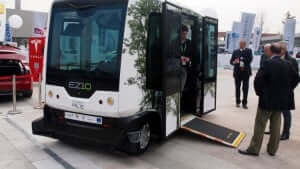
A European firm. “Easymile” is also working working on small, robotic mini buses. In contrast to Olli, the EZ10 is not intended for the open road. It’s actually for private areas such as colleges and business parks. The EZ 10 robotic minibuses travel slowly, limited to 15 miles per hour at most. The routes are predetermined. Station stops can be both pre programmed or on demand (passenger request).
Automated People Movers and Group Rapid Transit
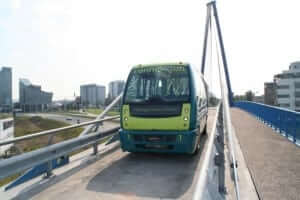
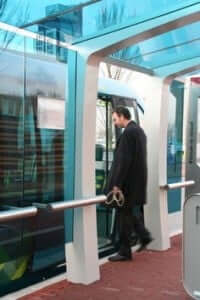
Back in February, we covered people movers and driverless pods.
It’s time for an update. A European firm, “2Getthere”, is working on its third generation pod system. The company has coined the term “Group Rapid Transit”
The distinction between this system and those like Olli, is the the presence of a fixed guideway. These sorts of systems don’t travel in traffic- they operate more like small trains- with fixes stations stops. These sorts of systems can rapidly move a large number of people, and are well suited to parking lots, airports and so forth.
Driverless Rail
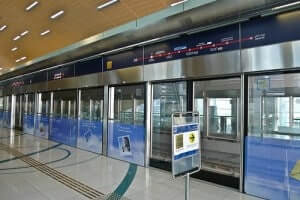
Obviously there are existing people movers and existing trams which each transport a good number of people without human intervention. We’re all familiar with the airport trains that whisk you from terminal to terminal- most of these have no driver or conductor.
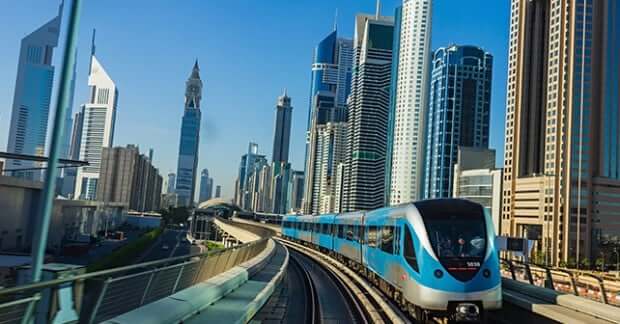
Conventional Metro train systems are also going with automated service. The largest driverless train is Dubai’s new Metro system. It’s rather successful, and currently undergoing expansion, Dubai is currently exploring the merits of a driverless high speed Hyperloop. (For a comprehensive look at this promising travel technology, we refer you to our Hyperloop history article).
World’s First Automated Flying Passenger Taxi Drone
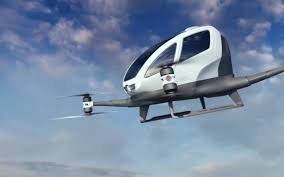
To end this post, we’d thought we’d finish up with something lighter, and more playful. Earlier this year, Ehang, a small Chinese aerial photography firm, unveiled its automated “E 184”- A flying drone, sure- but a large one- large and powerful enough to seat (and taxi) one passenger comfortably. As this is a robotics and automation post- obviously this drone is completely autonomous. Simply provide it with your destination via smartphone or tablet- and you’ll be quickly whisked toward it- high above any snarled highways or streets below.
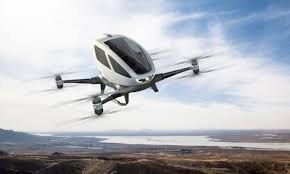
The E184 vehicle is essentially a “quadcopter” (four large arms with eight propellers). It has no controls, and one may not need a pilot’s license to operate it. It flies at up to 62 miles an hour, and but at this time only has a maximum travel time limit of 23 minutes.